Why Indian SMEs Delaying AI ERP Implementations Are Losing Ground Quietly
There is one inevitable question every CFO, COO, and Managing Director will ask themselves as their business evolves. It has always been there, and in recent times it has become more urgent. Because the answer today will define their competitiveness tomorrow:
Is the ERP system driving your business smarter than your team’s decisions about it? For decades, ERP was a back-office tool. You purchased it, you trained people to use it, you implemented it and kept it unchanged for 5–8 years as your business grew around it. The system was recording transactions. People made decisions based on that transactional data. And it worked fine for many years.
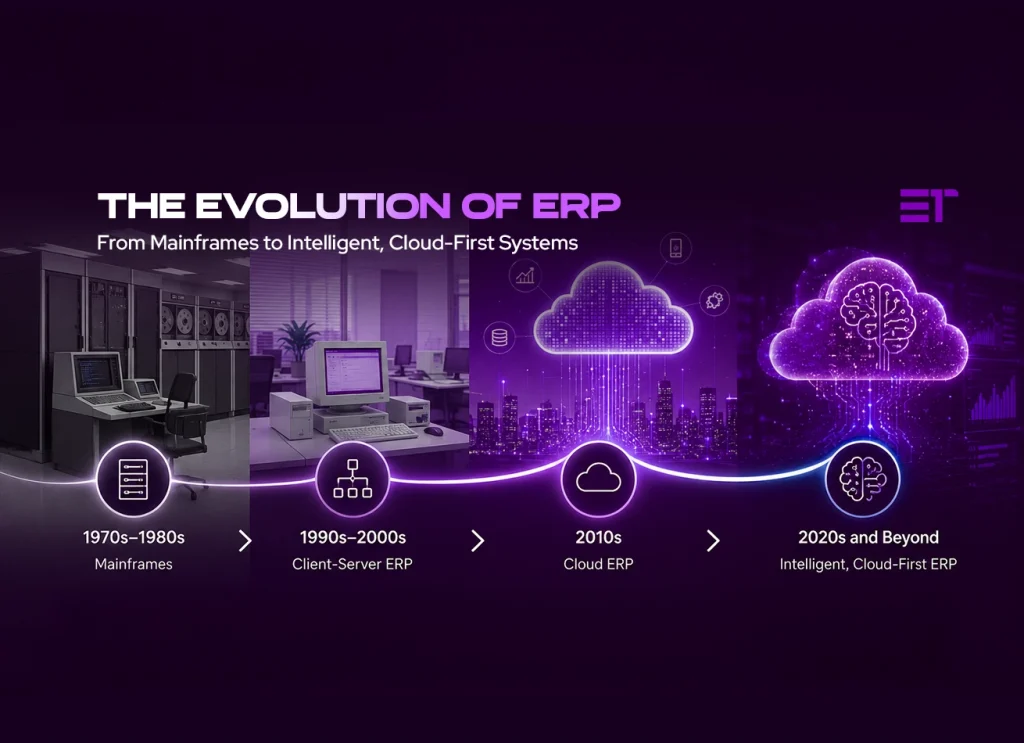
But then, things started changing. In fact, the whole category of ERP business technology has transformed into something completely different, offering more functionality and more benefits that can truly transform a business.
At Elevra Tech, in more than 9 years implementing SAP Business One for growing Indian businesses in manufacturing, trading, pharmaceuticals, food and beverages, and other sectors, we have seen how quickly and radically ERP is evolving. In fact, we see the market dynamics changing already right now. The conversation is shifting and it is crucial for C-level executives and business owners to understand why.
Why the “Wait and See” Strategy Can Cost Your Company
India is a land of prudence when it comes to capital allocation and technology investment. Indian SMEs tend to evaluate their technology purchases by payback periods, and that prudence has been serving them well. But now, it may start causing a problem as ERP has evolved and become a strategic business driver rather than just a back-office system. So, let us talk about the costs of delaying the implementation of smart ERP solutions in business terms.
Those SMEs, who delayed adopting SAP-compliant ERP, had to pay the price of compliance penalties, additional reconciliation costs, and disruption of their operations as they were integrating their existing processes with new regulations. Those businesses, which had integrated an intelligent ERP in place, passed GST, e-invoicing, and e-Way bills seamlessly. The system was connected; the data was clean and up-to-date.
Next step is the adoption of AI-driven ERP. This is the next compliance and competitive curve. And it is arriving quicker than any previous one before.
Here are some examples of how the adoption of AI ERP impacts your business operations and decision quality:
Your competitor implements AI ERP. Its system can predict the demand and adjust procurement strategies 90 days in advance, whereas your procurement is based on monthly MRP runs manually. The competitor’s finance team closes the books in three days, while yours takes 12. The competitor’s sales team enters the quarterly review of the board armed with real-time analytics on sales margins per SKU, per region, per distributor.
This is not an abstract scenario we create. This is our experience talking. Right now, in Pune, Chennai, Ahmedabad, Delhi-NCR and Mumbai, one of the competing businesses in the same vertical is taking over the market because it decided to implement SAP Business One and adopt AI-powered ERP 18 months earlier.
What Does “AI ERP” Mean, Really?
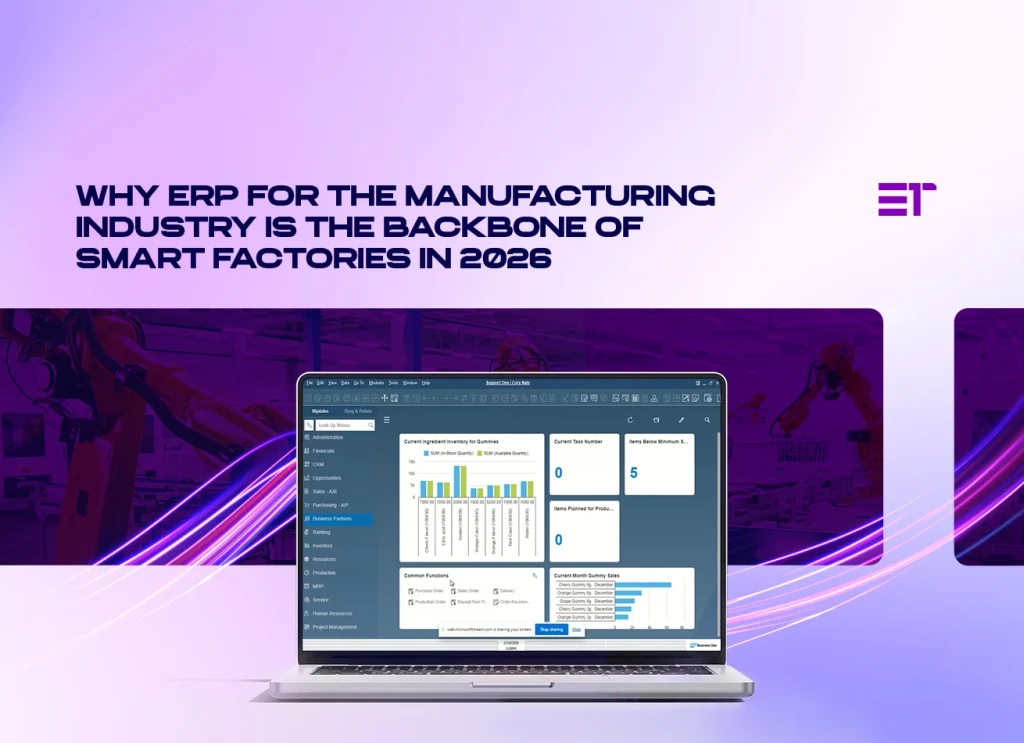
It is not difficult to find information on AI ERP and its capabilities. But here is the thing. As a business owner or C-level executive, you have specific requirements for the ERP system you will implement, right? Your business works the way it works and has some specific processes that you have been managing using spreadsheets, accounting systems, etc. And the question that really matters is how AI ERP helps meet your unique business requirements.
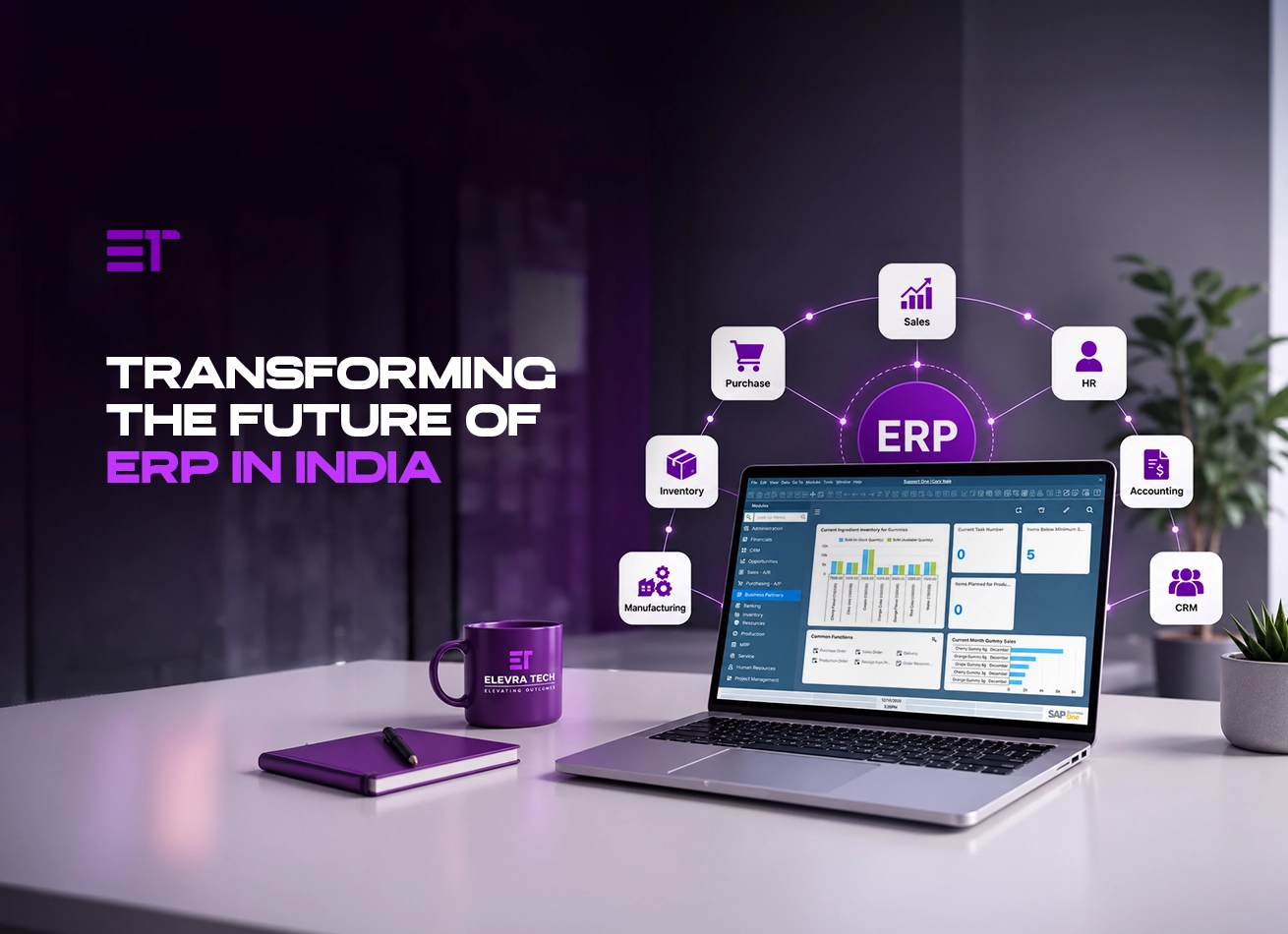
Let us put some numbers on it. You are dealing with inventory across several warehouses, run payroll for 200 people and track 400 customers/distributors. Your ERP system should automate the entire cycle of accounting and reporting as well as procurement, manufacturing, sales, customer support and HR processes.
And then, here comes the question: what does AI ERP mean for your business?
It definitely doesn’t mean a conversational bot built on your existing ERP system. Rather, AI ERP means integration of machine learning, predictive analytics and intelligent automation with the processes that govern your business. Here, as an SAP Business One Premier Partner, we can illustrate the concept with actual examples from the implementation experience at SAP Sapphire 2026, where AI capabilities of SAP Business One were demonstrated by the product’s developers.
AI ERP implies the following for your business:
- Predictive, not analytical reports
Not only you see what has happened in the past, but your system predicts what will happen soon. Instead of monthly MRP cycles, your procurement planner sees what SKUs might go out of stock 45 days ahead and adjusts his purchases accordingly.
- Smart exceptions handling
Instead of reviewing hundreds of incoming invoices, your system analyzes them and immediately shows you those 12 documents that are exceptions in one or another sense.
- Smart decisions support
Your planners can be certain what is the optimal batch size to schedule the production in accordance with current cost of raw material, deliveries, manufacturing capacity and available working capital.
- Compliance built in rather than bolted on
GST, TDS, TCS, e-invoicing, and e-Way bill are not add-ons to your system. They come as integral components of SAP Business One developed by SAP India itself.
The Indian Business Context: Why It Requires Smart ERP More Than Others
Indian businesses, particularly Indian SMEs, are diverse in many aspects: manufacturing vs. trading, domestic market vs. exports, small vs. medium-sized businesses, single location vs. multi-state operations. But they all have one thing in common: their complexity. Indian businesses have complex operating environments with multiple stakeholders and regulatory obligations, and their operations cannot afford inefficient processes, delays and errors.
Which is why the future of ERP in India should include smart ERP that supports Indian businesses in their day-to-day activities, not a standard business technology solution. SAP Business One, implemented and supported by Elevra Tech, caters to this very context:
- Multi-branch accounting with real-time P&L consolidation
- India-specific statutory compliance, including GST, e-invoicing under IRN framework, and e-Way bill
- Landed cost tracking critical for importing businesses
- Batch/serial number traceability in production
- Production planning for discrete manufacturers and for process manufacturers
- Dealer/Distributor Management and Channel Sales and Pricing Control
The above requirements are specific for Indian businesses and can only be met by SAP Business One and intelligent ERP solutions implemented by Elevra Tech.
How the Transition Works from Legacy to Smart Systems
Another question we hear frequently is: “What will it take to transition our business from legacy ERP or disconnected spreadsheet-based processes to AI ERP?” In this case, the method of implementation of smart ERP is crucial. There is no standard implementation plan, just as there is no standard Indian business.
The methodology developed by Elevra Tech and applied in SAP Business One implementation is proven to deliver reliable and predictable results in terms of both cost and timelines. Based on the SAP Activate principles highlighted by SAP at the SAP Sapphire 2026 event, it makes it possible to go live 6 weeks faster, while keeping everything intact: configuration and testing effort, migration of historical data, customization, user training, and so on.
As a result of Elevra Tech’s SAP Sapphire 2026-aligned implementation methodology:
- Implementation cost is reduced, as a substantial part of system configuration is completed by AI-driven SAP Business One
- Time to value is shortened, as you start reaping the benefits of SAP Business One’s intelligent capabilities faster
The Key Questions for Every C-Suite Leader to Ask Now
If you are the owner or C-level executive of a growing business, you do not need to be persuaded to invest in AI ERP anymore. You understand that the system you will implement now may be the difference-maker in 1–2 years. The question that really matters is how to approach it strategically.
Some key questions every business leader or executive should consider:
- What is our data quality baseline?
AI-driven ERP can be as good as data it works with. Prior to implementation of the system, Elevra Tech will run data readiness assessment and determine what master data (customers, vendors, items, bills of materials, etc.) requires cleansing and improvement.
- Which processes will drive the maximum value first?
Implementing AI ERP does not require a massive transition from legacy ERP or spreadsheets. Even when deployed partially, the system provides you with meaningful ROI, for instance, with predictive inventory management. It is important to prioritize.
- What skills does our team need to operate a new system?
Technology adoption in Indian businesses is a critical issue. In many cases, ERP implementation fails not because of the technology but because of the lack of knowledge or experience in operating such tools. Elevra Tech helps you mitigate these risks by providing extensive training after go-live.
- What is the competitive landscape expected to look like in 18 months?
Think of your competitors, what they are going to do with AI ERP, and how their strategy may impact you. The businesses adopting AI ERP now are going to be ahead of their competitors in 18 months.
Elevra Tech Perspective: Why It Is the Most Crucial Business Decision for You to Make This Decade
As a SAP Business One Premier Partner, we are more than implementation providers. We are your business advisers, guiding you through your ERP-related questions. And based on our experience implementing ERP systems for Indian businesses over 500 times, we believe in this conclusion:
The future of ERP in India belongs to intelligent and integrated ERP. And those companies investing in AI ERP for Indian SMEs right now are not doing it as a precaution. They are doing it as a strategic step to secure their competitive position in the coming years.
Gap between the early adopters and others in technology adoption does not stay narrow. Over time, it widens and grows due to the increased operational efficiency, better decision quality, capability of attracting the brightest talent (who wants to work with smart systems) and other reasons. Being on the right side of the gap is essential.
Elevra Tech mission is to make it happen for you.
Ready to Understand What AI-Powered ERP Means for Your Business?
Elevra Tech offers ERP Readiness Assessment, a complimentary session of 2 hours with our consultants that assesses your business requirements for AI ERP and shows you the future of your ERP landscape once SAP Business One implemented.
FAQs About AI ERP for Indian Businesses
What is AI ERP and how is it different from traditional ERP for Indian SMEs?
A traditional ERP system records transactions within the business, tracks inventory, and posts invoices. AI ERP for Indian SMEs goes far beyond that. It analyzes patterns in the transactional data generated by ERP and uses these patterns to make predictions and recommendations for the company. For example, a traditional ERP shows you what you have: a certain amount of raw material. While an AI-driven ERP tells you not only that you have this raw material but also that at your current consumption rate and in combination with two planned productions with a vendor that can deliver it within 12 days, you need to purchase 125 more units and the system generates a corresponding PO for you to approve. So, this is a difference in the system’s role: it is not a separate analytic tool. It is integrated into business process.
Is SAP Business One the right AI ERP for my mid-size company, or is it only for large enterprises?
SAP Business One can be considered mid-range ERP. It can serve companies with revenues ranging from ₹10 crores to ₹500 crores. It is not a miniaturized SAP suite. It is a dedicated tool for small and mid-size businesses that don’t have large in-house departments for analytics and IT team. Future of ERP in India in this segment of companies belongs exactly to SAP Business One – this is a platform that SAP’s CEO, Christian Klein, announced at SAP Sapphire 2026 as one of the engines of the Autonomous Enterprise for SMEs. It means that the intelligence you need to use as an owner or C-level executive is available in SAP Business One. In addition, our consultants have experience implementing SAP Business One for Indian SMEs, understand your business context, challenges and peculiarities of Indian regulations. If your business is growing and operates on spreadsheets or disconnected accounting systems, the future of ERP in your company is SAP Business One.
How long does an SAP Business One implementation take and how disruptive will it be to operations?
Implementation of SAP Business One is possible in 8 weeks, if done by Elevra Tech and according to our SAP Activate-aligned methodology, which is proven at SAP Sapphire 2026. The reason behind the shortened timelines is a large set of pre-configured industry templates that our company developed specifically for Indian businesses (manufacturing, trading, distributors). Thanks to that, our consultants perform less custom configuration during implementation. At the same time, disruption caused by implementation is inevitable and consists of efforts and time necessary for your team to validate processes and migrate historical data.
How does AI ERP handle India-specific regulations like GST, e-invoicing, and e-Way Bill?
For any business in India, this is the key question before choosing an ERP vendor and platform. And the answer to this question is crystal clear. India localization in SAP Business One is provided and maintained by SAP itself. Which means that you get the updates when the GST council makes a change in regulations, the GSTN makes updates to its API or the threshold for e-invoicing changes. Specifically, SAP Business One provides support for the following features: generation of GSTR-1, GSTR-3B, and annual returns, IRN and e-invoicing (JSON format) generation, e-Way bill generation, TDS/TCS deduction and reporting, and input tax credits calculation. For a business CFO, this is the key aspect of SAP Business One.
What ROI am I expected from AI ERP investment and how does Indian SME calculate it?
Based on our experience of implementing ERP systems for Indian businesses (over 500 implementations), we can say that 100% ROI can be achieved within 2-4 quarters of SAP Business One go-live, assuming your team will operate the system properly and leverage its full capabilities. This return of investment comes from four major sources: reduced inventory carrying costs as a result of improved demand forecasting (typically by 15-25%), shortened debtor days as a result of improved collections and customer follow-up (up to 15%), reduced finance team work required to prepare GST filings, close monthly accounts, generate financial statements and perform reconciliations, shorter finance team close period (typically 5 days vs. 8-12).
Why should I choose Elevra Tech as my implementation partner rather than any other firm?
As it was mentioned before, ERP implementation is a highly specialized service. Not every provider offers it. And among the providers that specialize in it, not everyone can deliver high-quality results. Here, as a potential client, you need to select a provider that is reliable, knowledgeable about your business and your regulatory and cultural context. Our 500+ successful implementations show that we are reliable and that we have deep vertical expertise in manufacturing, trading, pharmaceuticals and other Indian SME business segments.
Three reasons you should choose Elevra Tech for AI ERP implementation:
- Speed and reliability of implementation: thanks to Elevra Tech’s SAP Activate-aligned implementation methodology and pre-configured industry templates, we deliver 8-week go-lives with 98% success rate
- Vertical expertise: we have industry vertical expertise, so we know your business and your ERP implementation requirements better than others
- India-first approach: we know all peculiarities of your business environment inside out and account for it in our implementation methodology.