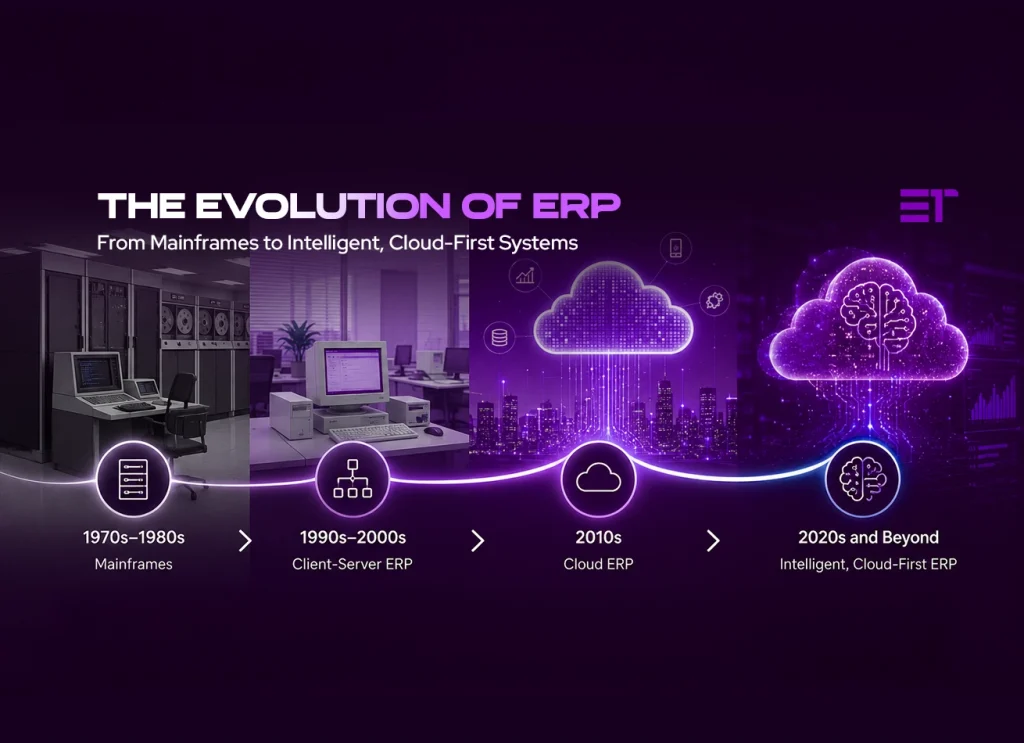
The manufacturing industry is currently going through a stage of rapid transformation due to the massive adoption of smart technologies and digital infrastructure. However, due to this sudden transition, older legacy systems are unable to provide the desired performance and productivity, forcing manufacturing businesses to integrate advanced ERP for the manufacturing industry.
Modern ERP software for manufacturers, such as SAP B1, is robust and elegantly designed to assist companies in diverse fields ranging from finance, logistics, supply chain, and automation, etc. Here’s a detailed look at how ERP implementation for manufacturing companies is boosting productivity and raising ROI.
Challenges in the Manufacturing Sector
Negligible Real-Time Data Access
Several manufacturers are still dependent on outdated systems that are unable to keep up with the data demands required to function in modern economy.
It causes disruptions and slow decision-making across all departments and stages of production.
Inefficient Inventory Management
Conventional systems frequently struggle with inventory management, which results in persistent overstocking and wasted resources.
It causes severe financial crisis and can bankrupt companies if not fixed timely.
Supply Chain Disruptions
Lack of proper coordination and will lead to disrupted supply chains, and it can hurt customer relations as well. Constant supply chain disruption is a very negative sign for businesses. It may cause a lot of potential financial and reputational damage if not solved.
Production Planning and Downtime Issues
Even today, many manufacturers rely on outdated manual methods to plan processes, causing regular downtimes and long production delays. It decreases overall productivity and efficiency while hitting hard on rising costs.
Rising Operational Costs
Lack of optimization and streamlining of processes pushes manufacturers towards bearing higher costs and several bottlenecks that make production significantly expensive and less productive.
Why SAP B1 ERP for manufacturing is Crucial for Businesses?
Centralized Business Operations
SAP B1 is widely renown worldwide due to its highly centralized and cohesive system.
Users can manage various stages of production from a single dashboard. Thus, helping in reducing data inaccuracy while improving and promoting collaboration among the various departments.
Real-Time Data Analysis
This advanced ERP for the Manufacturing Industry boasts powerful data-analysis tools and addons that is very helpful in converting real-time data into meaningful visualizations.
Its real-time dashboards and actionable insights, enables stakeholders in quickly making data-driven choices and also in modifying operations in response to market needs.
Improved Production Planning
SAP B1 ERP for manufacturing’s robust automation technology is already playing a major role in streamlining production planning and ensuring seamless resource allocation for minimizing disruptions, eliminating human errors, and boosting productivity.
Enhanced Supply Chain Management
The centralized ERP software for manufacturers makes it a lot easier to manage inventory and ensuring seamless flow of the supply chain. Users also leverage its accurate tracking capacity for raw materials and finished products accurately, allowing businesses to reduce wastage and prevent stock overflows or shortages.
Scalability and Customization
SAP Business One offers manufacturing companies all the necessary tools and features to meet their growth requirements. Moreover, its flexible and versatile design is very important in empowering companies to seamlessly integrate any third-party tools for improving usability and effectiveness.
Benefits of SAP B1 in the Manufacturing Industry
End-to-End Process Visibility
Holistic and overhauled process visibility is one of the major benefits of ERP implementation for manufacturing. SAP B1 empowers manufacturing companies to track, manage, and monitor processes, operations, and workflows across departments in real-time with accurate data flow.
It drastically elevates production efficiency and enables seamless operations without any downtimes.
Better Demand Forecasting
The forecasting and advanced data analytics of this ERP for the Manufacturing Industry enable manufacturers to identify accurate future demand trends and adapt accordingly. It helps in preventing any overstocking or understocking of inventory and ensuring there are no delivery delays.
Quality Control and Compliance
Complying with legal and regulatory checks is very critical for any manufacturing business.
Thankfully, SAP B1 ERP for manufacturing is laced with automated compliance features that quality control tools use to maintain the highest product quality according to the latest standards without any defects.
Faster Order Fulfillment
SAP B1’s state-of-the-art automation capabilities empower businesses to automate order processing and delivery schedules. Some of its advantages can be seen in swift deliveries, boosting customer satisfaction and maintaining a healthy brand reputation in the market.
Data-Based Monitoring
SAP Business One’s detailed data insights and recommendations helps businesses while tracking key operational metrics like costs, ROI, and wastages. Businesses will attain optimal operational optimization for maximizing productivity and reducing overall costs.
Seamless Third-Party Integration
SAP B1 ERP for the Manufacturing Industry is enabling businesses for customizing and integrating industry-specific add-ons to tackle specific demands and challenges. Businesses are now maintaining their uniqueness while being adaptable to all market challenges and avoiding any major setbacks.
Future of ERP Implementation for the Manufacturing Sector
The need to digitalize and adapt to newer technologies is getting even more crucial than before, forcing manufacturing companies to move towards modern, advanced ERP systems to manage and streamline their operations. As advanced factories grow and scale, ERP for the Manufacturing Industry will be an invaluable asset required for integrating labour, processes, and decision-makers into a single consolidated ecosystem to boost productivity, streamline processes, and adapt to modern business demands.
Final Words
Overall, ERP for the manufacturing industry is super critical in supporting the current transformation towards smart workflows and automated processes. Manufacturing companies that effectively manage to ensure seamless integration of modern ERP software will be in a better position to scale their business and survive market turmoil. ERP systems such as SAP B1 offer tremendous benefits such as accurate data insights, automated workflows, enhanced decision-making, and seamless warehouse tracking. Investing in ERP implementation for Manufacturing companies will enable long-term growth and prosperity.