
Seamless SAP Deployment
Tailored to Your Short + Long-Term Business Goals
Elevra’s SAP Business One implementation services are undertaken with the speed and strength today’s businesses need to meet their goals. We achieve successful implementations for our customers because we have a clear-cut plan and process:
- Configuration scope defining
- Dedicated account manager and POC assignment
- Team allocation and implementation kick-off
- Implementation QC to meet your business needs
- Actionable plans to address technical challenges
- Go-live of the SAP Business One software
We Implement in Record Time
12-14 weeks is our average go-live timeline, and our customers usually start seeing ROI within 3-6 months of SAP Business One go-live.
Industry + Enterprise Tailored Implementation
Elevra offers SAP implementation services across a wide range of industries, leveraging deep domain expertise and tailored ERP solutions.
Our Setup Is Agile
We use SAP’s latest innovations and ensure your system is AI-ready. We implement SAP Business One, keeping scalability and scope for employing cutting-edge business technology.
Risk, Disruption and Worry-free SAP Business One Implementation
Any new setup can stress the stakeholders. At Elevra, we’ve engineered a proven implementation framework that eliminates uncertainty, no matter your business size or complexity. With our expert SAP implementation, you can ensure a smooth transition and seamless integration of SAP Business One into your existing systems, leveraging industry best practices for maximum ROI.

Our Step-by-Step, End-to-End
SAP Implementation Services
End-to-end deployment of SAP Business One aligned to enterprise architecture, data integrity, and process automation standards.
System Design and Blueprinting
Elevra develops the Technical Design Document (TDD) and Business Blueprint Document (BBD) detailing module configurations, data structures, interfaces, and workflows.
Configuration and Customization
We configure SAP modules (FI, MM, SD, PP, etc.) and apply custom development (if in the scope) aligned with business logic.
Data Migration
Our team executes structured ETL (Extract, Transform, Load) using Data Transfer Workbench (DTW) or Integration Framework with multi-level validation for data accuracy.
Integration Enablement
We’ll establish real-time connectivity with external systems (CRM, eCommerce, WMS, or SAP S/4HANA) through APIs, DI API, Service Layer, or middleware connectors.
Testing and Quality Assurance
Our consultants perform unit, integration, regression, and user acceptance testing (UAT) with defect tracking and sign-off cycles.
Training, Go-Live and Hypercare
We deliver role-based training, go-live support, and post-implementation stabilization with continuous monitoring and issue remediation.
Frequently Asked Questions (FAQs)
What does SAP Implementation support cover?
Getting support with SAP setup means having guidance through every step of putting the system in place that many SAP partners offer. The support process covers organizing the rollout, shaping the software to fit how a business works, moving data across, checking everything that runs right, training staff to use it, then sticking around afterward to answer queries.
What are the common SAP Business One Implementation challenges?
Change tends to meet pushbacks when SAP systems roll out. Without clear direction, firms sometimes jump in without solid roadmaps guiding them forward. Moving information across can trip things up, especially if formats clash or details get lost along the way.
How can businesses overcome SAP Implementation challenges?
Starting strong means lining up each step before diving into SAP changes. A clear path forms when teams talk openly, not just once but all along the way. Instead of rushing ahead, slowing down for user practice pays off later. Moving old information across? That part needs attention, not shortcuts. Success shows up most where preparation meets steady effort.
What factors influence SAP implementation costing?
Depending on things like company size, how many people will use it, plus just how much tweaking is needed, what SAP costs can shift a lot. Cloud or local setup plays a role too. Connecting it to existing systems matters just as much.
What benefits of SAP Implementation are there for any business sector?
Because operations run smoother, companies often see gains when SAP goes live. Where tasks once tangled, clarity now appears through clearer data paths. Efficiency rises since steps align with fewer gaps between them. Resource handling improves, not by chance, but through structured workflows. Decisions gain strength from reliable insights pulled directly from systems. Transparency grows where it matters most – across departments and levels. Optimization happens gradually, yet noticeable within daily routines. Benefits emerge differently depending on industry needs.
Why Is SAP Implementation Support Important?
Most times, keeping SAP systems running well depends heavily on steady help after setup finishes. Without consistent backing, hiccups can slow things down once the software goes live. Help during these phases keeps everything aligned and moving smoothly. Long-term success often shows up when support stays active behind the scenes.
Blogs

Intelligent ERP – The Future of ERP in India Has Already Arrived!
Why Indian SMEs Delaying AI ERP Implementations Are Losing Ground Quietly There is one inevitable question every CFO, COO, and Managing Director will ask themselves
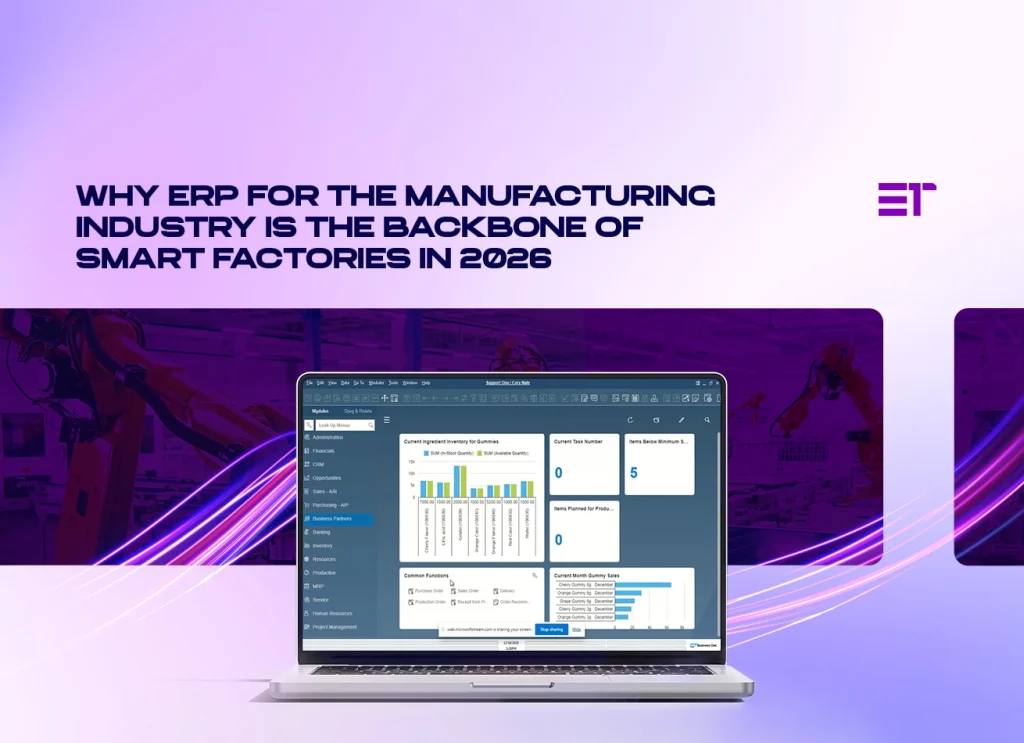
Why ERP for the Manufacturing Industry is the Backbone of Smart Factories in 2026
The manufacturing industry is currently going through a stage of rapid transformation due to the massive adoption of smart technologies and digital infrastructure. However, due
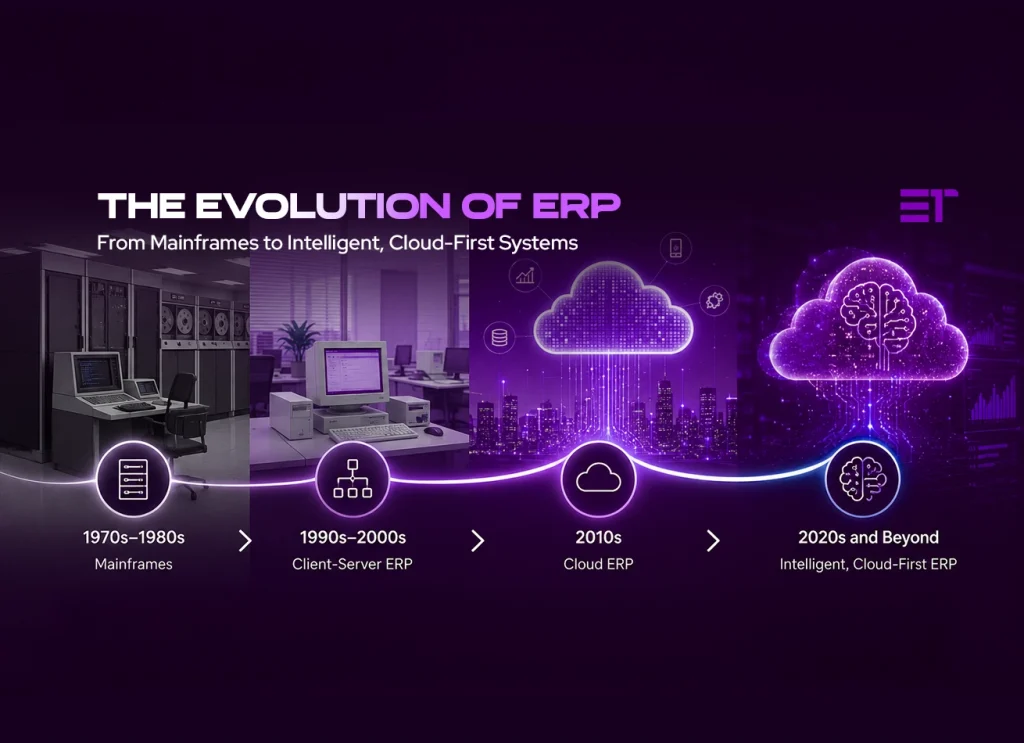
The Evolution of ERP: From Mainframes to Intelligent, Cloud-First Systems
ERP was not always as powerful business platform as it is today. Primarily, ERP focuses on manufacturing, but now ERP has become the digital core
Let Us Show You a Demo for Your Business
We’re happy to show you the real SAP Business One solution’s working and map out your path ahead to operational efficiency.
Your benefits:
- Collaboration across departments
- Interactive dashboards
- Built-in analytics
- Real-time reporting on a single platform
What happens next?
We schedule a call at your convenience
We do a discovery and consulting meeting
We prepare a proposal and begin deployment